
Table of Contents
In 2026, a new phrase is quietly spreading through procurement departments across the United States:
“Is your packaging compliant with California SB 54?”
For many flexible packaging exporters, this question feels unfamiliar. After all, your factory may be located thousands of miles away in China, Vietnam, India, or Turkey. Your customer imports the products. California handles the recycling.
So why should you care?
Because California is not just another state. If California were a country, it would rank among the world’s largest economies. And when California changes the rules, global supply chains tend to follow.
For decades, flexible packaging was designed around three priorities:
- Low cost
- High performance
- Fast production
Today, there is a fourth requirement:
- Recyclability
And California’s Extended Producer Responsibility (EPR) program is accelerating this transformation faster than anyone expected.
The Law That Everyone Is Talking About
California’s Senate Bill 54 (SB54), also known as the Plastic Pollution Prevention and Packaging Producer Responsibility Act, officially entered into force in May 2026 after years of discussion and rulemaking.
The law establishes ambitious targets for packaging sold into California by 2032:
- 100% of covered packaging must be recyclable or compostable.
- Single-use plastic packaging must be reduced by 25%.
- At least 65% of single-use plastic packaging must be recycled.
At first glance, many exporters say:
“That’s my customer’s problem, not mine.”
Technically, they are partly correct.
The obligated party under EPR is often the producer, brand owner, or importer. However, purchasing behavior is changing rapidly. Importers don’t want to spend their time explaining why a multilayer pouch from overseas cannot meet future recycling requirements.
Instead, they are beginning to ask suppliers for compliant alternatives.
In other words:
California may not regulate your factory directly, but it will influence your customers’ buying decisions.
Why Flexible Packaging Is Under the Spotlight
Flexible packaging has always been the “problem child” of the recycling world.
Think about common products:
- PE mailing bags
- Bubble mailers
- Stand-up pouches
- Frozen food packaging
- Agricultural film
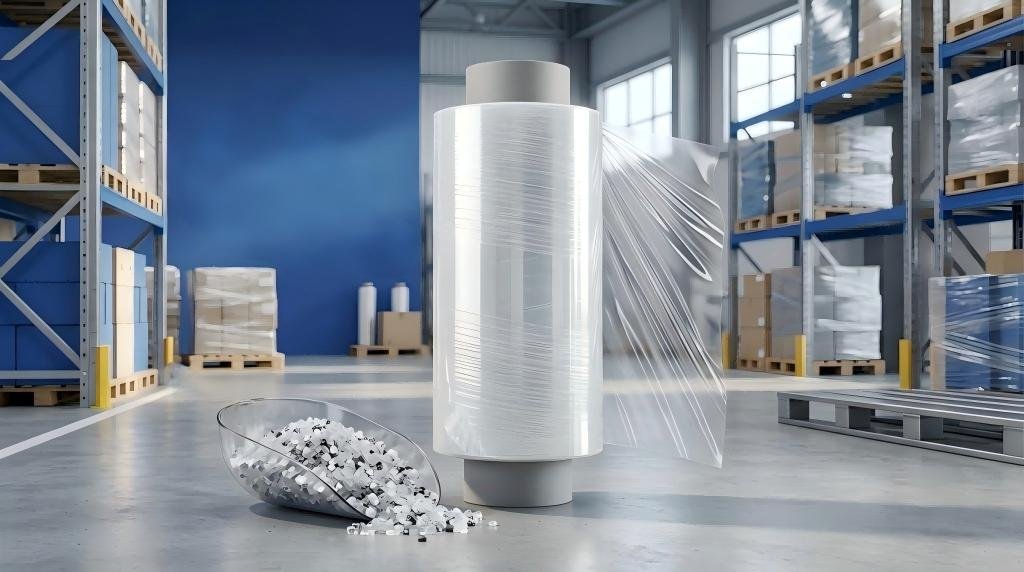
- Stretch film
- Vacuum bags
- Laminated snack packaging
Many of these products contain multiple material layers:
- PE
- PET
- PA
- Aluminum foil
- EVOH
- Adhesives
These structures provide excellent barrier properties and durability, but they are notoriously difficult to recycle.
A plastic bottle is relatively straightforward.
A seven-layer snack pouch?
Not so much.
California regulators understand this challenge, which is why flexible packaging manufacturers are paying close attention to how “covered materials” are defined under SB54. The law applies broadly to single-use packaging and plastic food service ware, including many flexible packaging formats.
The End of “Cheap Packaging Wins”
For decades, packaging procurement looked like this:
| Question | Importance |
|---|---|
| Is it cheap? | High |
| Is it strong? | High |
| Is delivery fast? | High |
| Is it recyclable? | Low |
In 2026, the table is changing.
| Question | Importance |
|---|---|
| Is it recyclable? | Very High |
| Does it reduce EPR fees? | Very High |
| Does it contain PCR? | High |
| Can suppliers provide documentation? | High |
| Is it cost competitive? | Medium |
Packaging is becoming a compliance issue.
Imagine two suppliers:
Supplier A
- Lowest price
- Non-recyclable multilayer film
- No sustainability documentation
Supplier B
- 8% higher price
- Mono-material PE structure
- PCR options available
- Recyclability certification
Five years ago, Supplier A probably won.
In 2026?
Supplier B increasingly gets the meeting.
California’s Recycling Targets Are Influencing Procurement
California’s goals are not optional aspirations.
By 2032, producers participating in the EPR system are expected to collectively achieve:
- 25% source reduction.
- 65% recycling rates.
- Universal recyclability or compostability.
To achieve these targets, companies are asking difficult questions:
- Can we eliminate one material layer?
- Can we move from PET/PE to all-PE?
- Can we introduce post-consumer recycled content?
- Can we redesign packaging entirely?
This means exporters are entering an era where packaging engineers are becoming as important as sales managers.
The Rise of Mono-Material Packaging
One phrase appears repeatedly at international packaging exhibitions:
Mono-material.
Mono-material packaging uses one polymer family, making recycling significantly easier.
Examples include:
- PE/PE pouches
- All-PE mailer bags
- Mono-PP packaging
- Recyclable stretch film systems
Many converters are investing heavily in:
- MDO-PE technology
- Advanced extrusion
- New barrier coatings
- Digital traceability systems
The goal?
Maintain performance while improving recyclability.
For flexible packaging exporters, mono-material products may become one of the strongest competitive advantages over the next decade.
EPR Fees Could Change Customer Behavior
Under California’s EPR framework, producers are responsible for registering, reporting packaging data, and paying fees through the approved Producer Responsibility Organization. Producers had key registration obligations beginning in 2026.
Although fee structures continue to evolve, everyone expects one thing:
Difficult-to-recycle packaging will become more expensive over time.
This creates a simple equation:
Lower recyclability = Higher long-term costs
That changes procurement conversations dramatically.
Instead of asking:
“Can you reduce the price by $0.02 per kilogram?”
Customers increasingly ask:
“Will this package increase our compliance costs in California?”
That is a completely different discussion.
Stretch Film Manufacturers Should Pay Attention Too
Many stretch film producers assume:
“We don’t make food packaging, so we’re safe.”
Not necessarily.
Warehouse packaging is becoming a sustainability issue.
Questions now include:
- How much resin is used per pallet?
- Can downgauging reduce plastic consumption?
- Does the film include PCR content?
- Can pre-stretch technology reduce waste?
California’s source reduction targets indirectly encourage businesses to use less material overall. Some milestones include reductions before 2032, with the broader target of 25% reduction in covered plastics.
This creates opportunities for companies offering:
- High pre-stretch machine film
- Ultra-thin hand wrap
- Recycled stretch film
- Lightweight pallet solutions
The message is clear:
Less plastic is becoming better business.
Why U.S. Customers Are Asking More Questions
American importers are nervous.
And honestly, they have good reasons.
California’s regulations affect thousands of producers, with estimates exceeding 5,000 companies potentially in scope.
Nobody wants to discover in 2029 that:
- Their packaging isn’t recyclable.
- Their supplier lacks documentation.
- Their EPR costs are unexpectedly high.
- Their products need emergency redesigns.
As a result, exporters are seeing more requests for:
- Material declarations
- Technical data sheets
- Recyclability statements
- PCR percentages
- Sustainability reports
- Supply chain transparency
The factories that can answer quickly will have a significant advantage.
California Is Only the Beginning
Here is the part many exporters underestimate:
California rarely acts alone.
Across North America, packaging regulations are expanding.
Industry observers expect more U.S. states to adopt EPR-style frameworks in the coming years, following the momentum created by California and other early adopters.
This means today’s California requirement could become tomorrow’s national expectation.
Many industry experts believe that by 2030, sustainable packaging questions will become standard in RFQs.
Imagine receiving an inquiry that reads:
Product: PE Mailer Bag
Quantity: 500,000 pieces
Requirement: California-compliant recyclable structure
That future is arriving faster than many expect.
Five Things Flexible Packaging Exporters Should Do Now
1. Audit Your Product Portfolio
Ask:
- Which products are recyclable?
- Which are multilayer?
- Which use virgin resin only?
Know your risks before your customers do.
2. Develop Sustainable Alternatives
Create at least:
- One mono-material product line.
- One PCR product line.
- One lightweight option.
You don’t need to replace your entire catalog overnight.
But you do need options.
3. Prepare Documentation
Customers increasingly request:
- TDS
- SDS
- Compliance statements
- Recyclability information
The supplier with better documentation often appears more professional.
4. Train Your Sales Team
Salespeople should understand:
- EPR basics
- SB54 terminology
- Recycling claims
- Sustainability trends
Because customers are already asking.
5. Turn Compliance Into Marketing
Instead of hiding sustainability efforts, showcase them.
Examples:
- “Designed for Recyclability”
- “Mono-Material PE Solution”
- “Supports Circular Economy Goals”
- “PCR Content Available”
Compliance is no longer just a legal issue.
It’s a sales tool.
The Biggest Opportunity Nobody Talks About
Every major regulation creates winners and losers.
Ten years ago, companies that adopted automation early gained an advantage.
Today, sustainability is creating the next divide.
The winners will not necessarily be:
- The biggest factories.
- The cheapest suppliers.
- The oldest companies.
The winners may simply be those who adapt first.
California’s EPR targets are not just about recycling.
They are changing:
- Product design
- Procurement decisions
- Supply chain expectations
- Global packaging strategies
And perhaps most importantly:
They are changing what customers expect from their suppliers.
Final Thoughts
A few years ago, flexible packaging was a commodity business.
Today, it is becoming a compliance business.
Tomorrow, it may become a circular economy business.
California’s SB54 sends a message to the global packaging industry:
The future belongs to packaging that can live more than one life.
For flexible packaging exporters, the question is no longer:
“Will California’s EPR affect us?”
The real question is:
“Will we be ready when our customers ask about it tomorrow morning?”
Because somewhere in California, a procurement manager is already writing an email that begins with:
“Can you confirm whether your packaging is recyclable?”
Leave a Reply